
Oil Climbs to Six-Week High as U.S.–Iran Tensions Stoke Supply Fears
Brent crude surged to its highest level in six weeks as escalating military tensions between the United States and Iran, coupled with threats to key shipping routes, overshadowed bearish inventory data and heightened concerns over global oil supplies.
By Vikram Singh
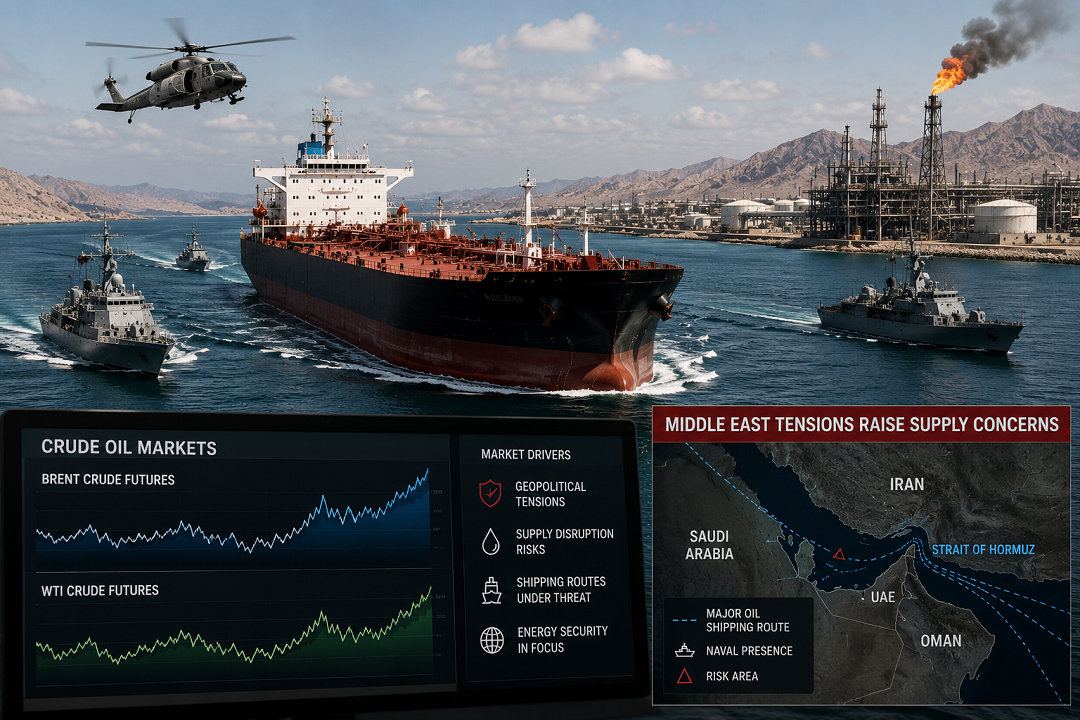
Key Takeaways
Brent crude climbed to a six-week high as geopolitical tensions in the Middle East intensified.
Supply disruption fears outweighed an unexpected increase in U.S. crude inventories.
Concerns centered on the Strait of Hormuz and renewed threats to regional shipping.
Rising oil prices boosted energy stocks while increasing inflation concerns across financial markets.
Traders continued pricing in geopolitical risk despite no confirmed large-scale production outages.
Oil prices climbed sharply on Thursday, with Brent crude reaching its highest level in six weeks, as escalating military tensions between the United States and Iran heightened fears of potential disruptions to global crude supplies.
Brent crude futures rose about 2% to $96 per barrel, their highest level since June 8, while U.S. West Texas Intermediate (WTI) crude gained roughly 1.7% to $88.27 per barrel after advancing nearly 3% in the previous session. The rally extended gains from Wednesday, when Brent settled more than $3 higher as geopolitical risks intensified.
The advance was driven primarily by growing concerns over oil supply rather than changes in global demand fundamentals. Markets reacted to a twelfth consecutive night of U.S. military strikes targeting Iranian positions, further escalating tensions between Washington and Tehran.
President Donald Trump warned that additional attacks on commercial shipping would prompt further U.S. strikes on Iranian infrastructure, while Iranian officials said an oil tanker caught fire after an explosion on a route south of the Strait of Hormuz. Officials also reported that two additional tankers turned back following the incident.
Iranian military officials described the Strait of Hormuz as effectively closed and said vessel transit would require coordination with Iranian authorities, raising concerns over one of the world's most critical energy chokepoints. Roughly one-fifth of globally traded crude oil normally passes through the waterway, making any disruption a significant risk for international energy markets.
Concerns spread beyond the Persian Gulf after Yemen's Houthi movement announced a naval blockade targeting Saudi Arabia and claimed responsibility for attacks on two Saudi oil tankers operating in the Red Sea. The developments heightened worries that disruptions could simultaneously affect both the Strait of Hormuz and the Bab el-Mandeb Strait, two of the world's most strategically important shipping corridors.
Energy traders rapidly increased the geopolitical risk premium embedded in crude prices, while shipping companies reviewed tanker routes and marine insurers reassessed regional exposure. Higher insurance costs and freight rates also threatened to increase transportation expenses for crude shipments.
The market largely ignored bearish inventory data released by the U.S. Energy Information Administration, which showed domestic crude stockpiles unexpectedly increased by approximately 2 million barrels during the previous week. Under normal market conditions, the surprise build would have weighed on prices, but traders instead focused on the possibility of future export disruptions.
Iran added to those concerns by warning that if it could not export oil, neighboring producers should not expect uninterrupted exports either. Although no major producing fields have been shut down, markets increasingly priced the probability of future supply interruptions rather than current production losses.
The strength of the rally was also reflected in the futures market. Brent's forward curve remained in pronounced backwardation, with near-term contracts trading at a growing premium to later deliveries, signaling expectations of tighter short-term supplies and stronger demand for prompt cargoes.
Higher crude prices reverberated across broader financial markets. Energy companies outperformed, while airline and transportation stocks faced pressure over rising fuel costs. Investors also reassessed inflation expectations, pushing Treasury yields higher as the prospect of sustained energy inflation complicated the outlook for monetary policy.
The latest rally underscores how quickly geopolitical developments can outweigh traditional supply-and-demand indicators. Market participants continue monitoring military activity, tanker movements and diplomatic developments across the Middle East, with any further escalation likely to support oil prices, while signs of de-escalation could quickly unwind the geopolitical premium currently embedded in crude markets.
Tesla Shares Fall After Earnings Miss as AI and Robotaxi Spending Clouds Outlook
Disclaimer
This content is for educational and informational purposes only. It is not financial advice. Stratton Journal does not recommend any specific investment or trading strategy.