
Oil at $83: How Hormuz Risk Is Reshaping the US Stock Market
With WTI in the low-to-mid $80s and Brent near $87–89, renewed Strait of Hormuz tensions are pressuring US indexes while energy outperforms. Here's how investors can position.
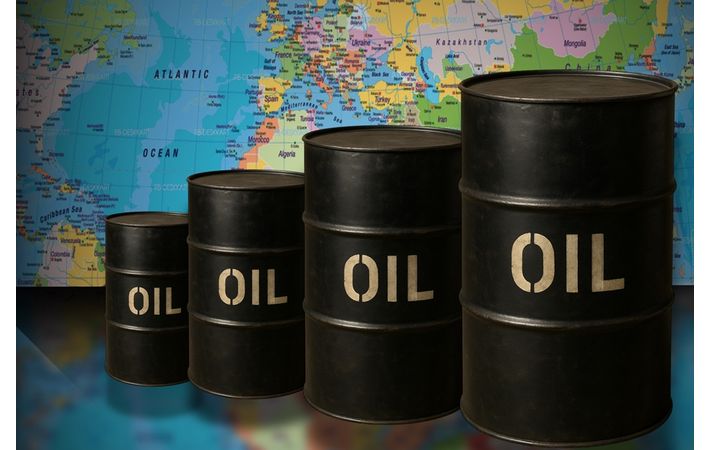
Oil prices have climbed back into the low-to-mid $80s for WTI and near $87–89 for Brent as of August 11–12, 2026, after Iran signaled the Strait of Hormuz would remain restricted until its conditions were met. The renewed uncertainty has weighed on US equities, with the Dow, S&P 500, and Nasdaq each closing roughly 0.3–0.6% lower, while the Energy sector outperformed.
The Strait of Hormuz is the world's most critical oil chokepoint, historically handling about 20% of global petroleum liquids trade. Disruptions, whether full closures, effective private-sector avoidance due to insurance and war-risk premiums, or partial restrictions, create large, hard-to-replace supply shortfalls. In 2026, US-Iran tensions have produced the largest modern oil supply disruption on record at times, with flows collapsing dramatically earlier in the year before partial recoveries and renewed interruptions. Pipelines offering limited bypass capacity, such as UAE and Saudi routes, cannot fully offset losses. Secondary effects include higher shipping and insurance costs, refined product tightness, especially diesel and jet fuel, and inventory drawdowns. These risks introduce a geopolitical premium into oil prices, and even when physical flows partially resume, lingering uncertainty keeps volatility elevated and prevents prices from fully normalizing quickly.
How Oil Moves Hit US Stocks
Oil price moves affect equities through several channels. Higher crude raises input costs for transportation, manufacturing, chemicals, and energy-intensive industries. Airlines, trucking, shipping, and some industrials face direct margin compression unless they can pass costs through fully. Elevated gasoline and energy prices reduce discretionary household budgets, pressuring consumer discretionary retailers, restaurants, travel, and related sectors.
Sustained higher oil feeds into headline and sometimes core inflation, complicating the Federal Reserve's path. Markets may price in fewer rate cuts or higher-for-longer rates, which weighs on growth stocks and rate-sensitive sectors like real estate, utilities, and technology valuations. Supply-driven oil shocks historically slow economic activity more than demand-driven ones. Strong US domestic production, near record levels around 13.6–13.8 million barrels per day, provides a partial buffer for the US economy and energy companies, but the US remains linked to global prices and refined-product markets.
Pure supply shocks often produce a negative stock-oil correlation, with stocks falling as oil rises. Demand-driven rises, by contrast, tend to show positive correlation. Recent periods of elevated geopolitical risk have reinforced supply-side concerns.
Historical episodes illustrate the range of outcomes. The 1973–74 OPEC embargo saw an extreme oil surge of over 300%, a deep equity drawdown of roughly 48% peak-to-trough for the S&P 500, and a recession. The 1990 Gulf War, 2022 Russia-Ukraine, and other shocks produced mixed equity responses depending on duration, magnitude, and offsetting policy and demand factors. Demand-led rises, such as during strong expansion periods, have often coincided with rising equities. In the current 2026 environment, energy has been a relative winner while broader indexes have shown sensitivity to fading Hormuz deal hopes.
Sector Winners and Losers
Higher oil and supply risk tend to benefit energy producers. Integrated majors like ExxonMobil and Chevron, exploration and production firms with low breakevens, especially US shale, and oilfield services see higher realized prices boost revenues, free cash flow, and dividends. The S&P 500 Energy sector has significantly outperformed the broader market year-to-date in 2026, with strong double-digit gains versus the S&P 500's more moderate advance. Some materials and chemicals can benefit from pricing power, and certain midstream and refining names may gain if product cracks remain strong.
On the losing side, transportation, including airlines, trucking, shipping, and cruise lines, faces fuel costs that often exceed 20% of operating expenses. Consumer discretionary names suffer from reduced spending power. Some industrials and manufacturing with high energy intensity are also pressured. Rate- and valuation-sensitive growth and tech names may decline if inflation fears reaccelerate Fed concerns. Consumer staples and healthcare can be more resilient due to pricing power and inelastic demand, though input costs still rise.
Energy's S&P 500 weight is relatively modest, in the low single digits in recent periods, so producer gains do not fully offset broader market pressure at the index level.
Positioning for Oil-Driven Volatility
There is no one-size-fits-all approach; positioning depends on time horizon, risk tolerance, and existing portfolio. Evidence-based principles and common institutional approaches include distinguishing temporary headline noise from structural supply constraints. Prolonged Hormuz-related disruption supports a higher oil price floor and elevated volatility. Avoid pure market timing of geopolitics, which is historically difficult, and focus on resilience and selective exposure. Maintain diversification, as oil shocks can reverse quickly on diplomatic progress.
Practical positioning ideas include a selective energy overweight, increasing allocation to high-quality US-focused E&P, integrated majors with strong free-cash-flow yields, and services companies. Many trade at attractive cash-flow metrics even after gains. Energy can serve as both a growth and cash-flow play and a partial portfolio hedge against further supply shocks. Consider sector ETFs like XLE for broad exposure or individual names with low breakevens and shareholder-return focus.
Reduce exposure to high-fuel-cost sectors, trimming or underweighting unhedged airlines, pure-play transportation, and highly discretionary consumer names unless valuations already discount significant risk. Consider inflation and real-asset hedges such as modest gold or broader commodity exposure, quality infrastructure, and select materials. TIPS or short-duration fixed income can help if rates remain elevated. Favor companies with pricing power, strong balance sheets, and stable demand, such as certain staples, healthcare, and select utilities.
US shale producers benefit from domestic output strength and limited direct Hormuz exposure. Global majors with diversified upstream portfolios offer resilience. Size positions appropriately and use hedges, such as options or inverse exposure, for concentrated risks. Rebalance after large moves; energy that has already rallied hard may warrant trimming back toward strategic weights if the geopolitical premium compresses. US production near records provides a structural advantage, and higher sustained prices support domestic investment and cash returns, but extreme spikes risk demand destruction and broader economic damage.
Scenario thinking can help. A short, contained disruption would likely see oil moderate, energy give back some gains, and the broader market recover on reduced inflation fears. A prolonged or escalated restriction would mean a higher oil floor, stronger energy relative performance, and greater pressure on growth and consumer sectors and Fed policy expectations. A rapid full reopening with inventory rebuild would soften oil and energy underperforms short-term, but inventory recovery can take months.
Key Risks and Caveats
Oil markets are highly headline-driven and can reverse sharply. US shale responsiveness and global spare capacity, when available, can moderate sustained spikes. Correlation shifts matter; what works in a pure supply shock may differ if demand weakens significantly. Individual company fundamentals, including debt levels, hedges, production costs, and shareholder policies, matter more than sector labels. This is not personalized advice; past patterns do not guarantee future results. Consult advisors and consider tax, liquidity, and overall asset allocation.
Rising oil prices driven by Middle East supply risks, particularly Strait of Hormuz uncertainty, act primarily as a supply shock. They typically pressure the broader US stock market through higher costs, reduced consumer spending power, and inflation and Fed concerns, while benefiting energy producers. The relationship is not mechanical; magnitude, duration, and whether the move is supply- or demand-driven determine the equity impact. Investors are best served by selective energy exposure as both a cash-flow opportunity and partial hedge, reduced concentration in the most fuel-sensitive losers, and a disciplined focus on quality and diversification rather than aggressive geopolitical timing.
Current conditions, with oil in the $80s and ongoing Hormuz risks, underscore the value of preparing portfolios for elevated energy volatility while recognizing the US production buffer. Markets will continue reacting to diplomatic signals, inventory data, and refined-product balances. Monitoring those, alongside traditional equity fundamentals, remains essential.
Further research
- JPMorgan Lifts S&P 500 Year-End Target to 8,000 on AI Capex Payoff and Earnings Strength
- Private Credit Stress Signals Emerge Amid Growth
- Berkshire Hathaway Accelerates Buybacks and Equity Buys; Cash Falls as Abel Deploys Capital; Shares Hit Post-Buffett High
- Energy Stocks Outperform as Crude Rally Extends Fifth Day
Sources
Related research
Disclaimer
This content is for educational and informational purposes only. It is not financial advice. Stratton Journal does not recommend any specific investment or trading strategy.